

Five playing cards. Stephen Hawking’s A Brief History of Time. A box of rocks. An artistic diorama of quantum entanglement. Stuffed animals. Old homework assignments from 7th grade.
These are a few of my son’s favorite things. At least, judging by what he’s packed in his moving boxes.
On Saturday, I knocked on Leo’s door at 11:45 am. He was still asleep. His fourteen-year-old legs dangled off the edge of his childhood bed. His mouth gaped open in a snore. I fanned the door open and closed, airing out the distinct aroma of teenage boy that inevitably and mysteriously accumulates overnight, no matter how powerful the ventilation or the day’s deodorant.
“Hey sweetie, time to get up. We need to get your room packed so we can disassemble your bed and sell it.”
With bleary eyes and heavy footsteps, Leo obliged. After a brief breakfast, he trudged into his room to pack. Through the walls, the alternating sounds of Weird Al Yankovic and Rage Against The Machine rang out, fueling his efforts.
As the sounds of “Amish Paradise” faded away, I checked on his progress. He had successfully carved out a small pile of items to discard: a box of magic tricks. Origami papers. The majority (but not all!) of his paper airplanes.
“What about this? This is too small for you,” I asked, dangling a backpack he wore when he was ten.
“Ugh! But!... Okay,” he frowned.
“And what about this?” I asked, picking up a child’s snowcap stitched with fake aviator goggles.
A ten-minute, teenage rebuttal ensued. He could wear this hat as a statement. He could go around talking in a silly voice and saying pilot-things to people. It would be epic.
“Dude. You’re not actually going to wear this,” I eyed him dubiously.
“Ugh. Okay.”
As the pile grew, so did Leo’s annoyance. I praised his efforts and turned my attention to what he had chosen to pack and keep. Boxes upon boxes were filled with random objects: crumpled sticky notes tangled in the wires of dated electronics; broken pencils; a tooth flosser.
From the doorway, LeVon weighed in, “Buddy, when we move to the new place, you’re going to have a more grown up room. There won’t be a natural place for some of these things. Whether you deal with them now or deal with them later, you’ll need to make more choices about things to let go of.”
LeVon and I don’t accumulate much stuff. We regularly discard things that no longer serve us. Functional, but doesn’t bring joy? See ya. Nostalgic, but not imbued with meaning? Thanks for the memories and goodbye.
My son resists this process fiercely. And for the most part, we let him. Of all the childhood traumas I might be held responsible for decades from now, I’m hopeful decluttering won’t be one of them. Then again, you never know.
On Sunday, we taped up the boxes and began disassembling the bed. A ten-year-old girl was receiving it. She and her parents were delighted.
“She’s so excited. She’s the smallest in her class, so this is going to be perfect for her for a long while!” her mom exclaimed.
“So was my son. It was perfect.”
As we disassembled the bed and carted it down the stairs, Leo’s face vacillated from disheartened to helpful. He watched with a frown as the drill deconstructed the bed, then cheerily volunteered to carry some of the heaviest pieces down the stairs. Once the job was done, we sat down and took a break.
“Jack’s going to start driving in a month! Isn’t that crazy?!” Leo exclaimed from the kitchen counter. In Colorado, you can start driver’s ed when you’re fourteen and a half.
“Makes sense. Is that something you’ll want to do soon?” I asked.
“I like getting myself into hard situations and then just trying to figure it out. I think I’ll give it a try. I’ll be fourteen and a half in… two months, three days, six hours, and twenty seven minutes.” Leo replied.
I gently reminded him of the weight of the responsibility. The learning process takes time. Some kids start right away. Others wait for years.
“Before you start, it might help to get more comfortable riding around town on your bicycle. Driving is complicated.”
Ensued the next teenage rebuttal: driving couldn’t be more complicated than riding a bicycle or playing ping pong.
Ten minutes later.
“Actually, maybe I don’t want to do this. Maybe I’ll just wait.”
As a fourteen-year-old, my son is moving through big changes. Caught in the awkward limbo between a young child and a young man, he swings moment-by-moment between holding on to what he’s outgrown and reaching for what’s next. He holds on to paper airplanes just as tightly as he holds on to physics books.
As a parent of a fourteen-year-old, I navigate the limbo. How high is the bar at this moment? Should he jump over or pass under? Should I step back or offer help? Do I insist that we discard the backpack four sizes too small? Do I offer temperance when he’s stretching too far? I wring my hands over these decisions daily.
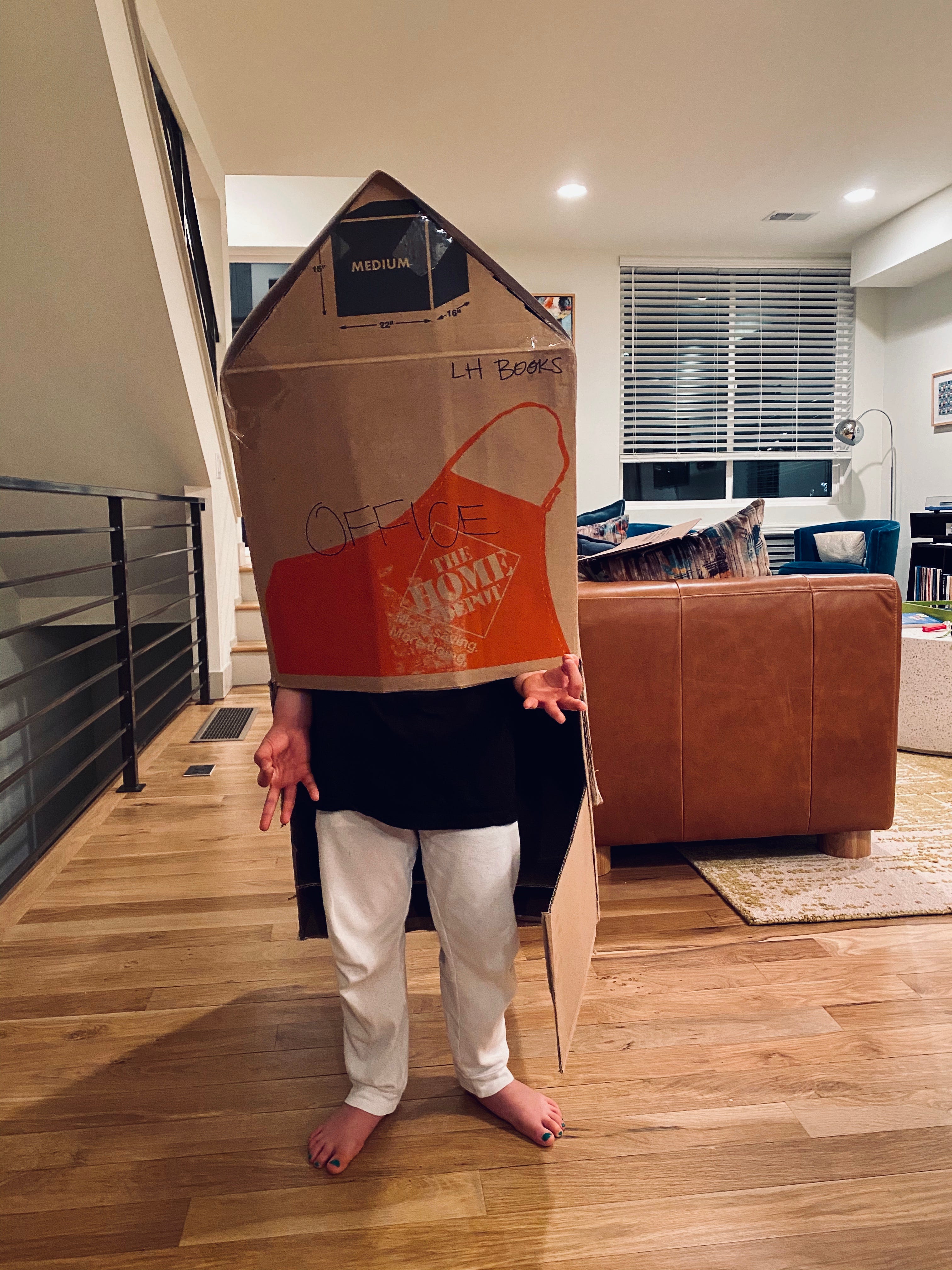
But the reality is that I’ll never know if I nailed it. Little decisions accumulate, weaving their way around, within, and through the formation of a person entirely their own and entirely inextricable from you. Contained in the whole of my son, the debris of my parenting is indistinguishable from the wisdom. They rattle around. The contents are fragile. The contents are strong. And I’ll never fully know what’s inside.
The next day, Leo woke up in a new bed to begin his first day of high school. With no fanfare or guidance, he got up, got dressed, made breakfast, and prepared to walk out the door. I held him back for a moment.
“You only have your first day of high school once. Let me take a picture,” I said.
A begrudging eye roll interrupted his face, streaked with nerves. He attempted a smile for the camera.
I hugged him, holding him tight. I told him I love him. I told him he’s going to do great.
And then I let him go, watching each step as he walked away.