

Yesterday, I hit a new personal record: a 275-pound hip thrust.
I felt epic. So much so that I asked for a picture of the loaded barbell.
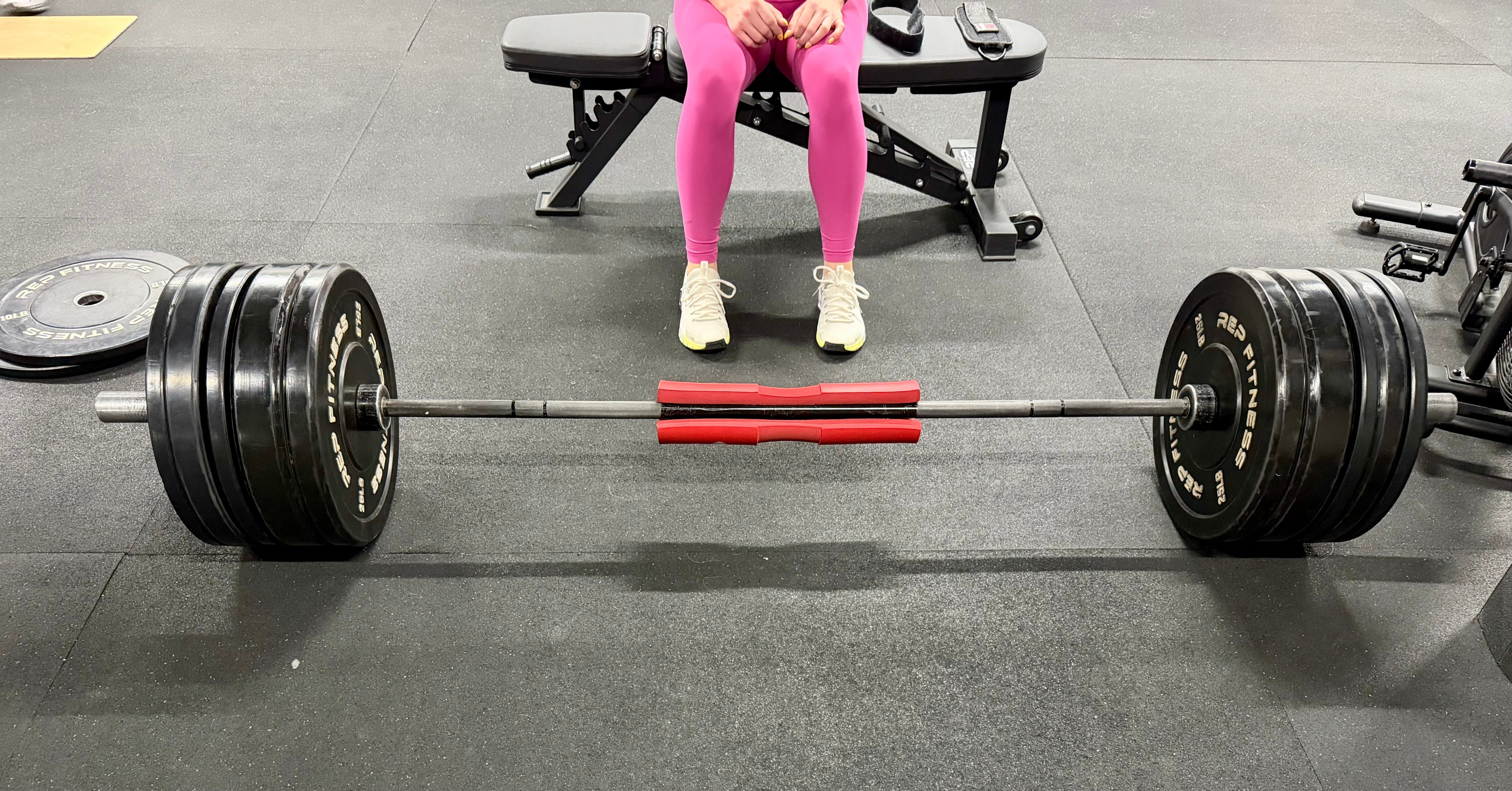
This isn’t how it all started. These aren’t the numbers I had counted on counting.
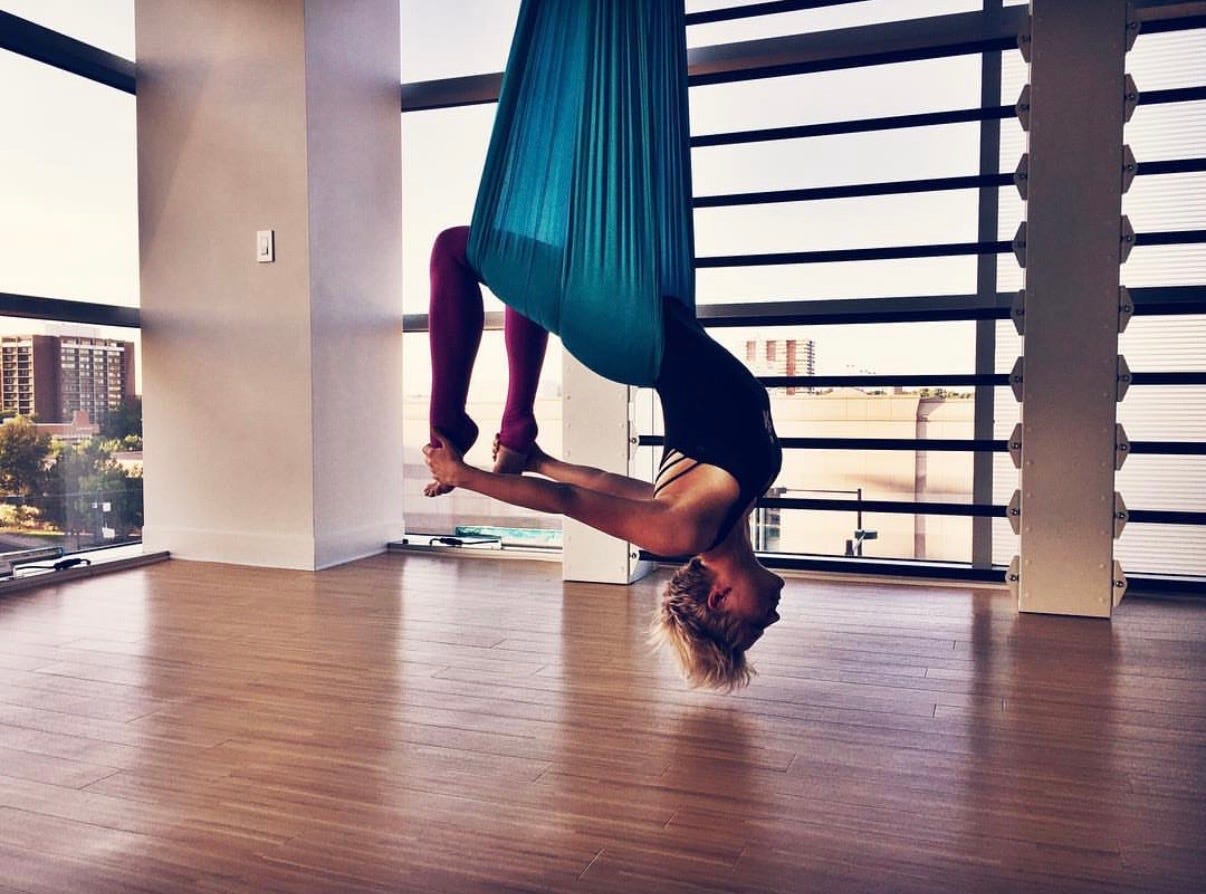
Ten years ago, I was just as diligent about my fitness. Each morning, I woke before dawn for barre, Pilates, and aerial yoga. I stretched and flipped into beautiful poses. I felt graceful and poised. I spent more time weightless than I spent touching any weight above five pounds.
At the gym, one particular female trainer stood out. Sarah Fox. Yes, that is her actual name. And she was, well, a fox. I watched her stride across the gym floor with her clients, donned in all black and an array of tattoos. I was intimidated by her. From where I stood, she was the epitome of female fitness. She had it all figured out.
Flash forward to my forties.
My body was changing. I wasn’t having it.
I adjusted my routine. I started running. I started strength training. Diligently, I followed my husband’s fitness regimen. Whatever he was doing was bound to work for me, too. I did it all. But, nothing seemed to change.
During my annual physical, new and unfamiliar numbers appeared on the scale. Despite all of my hard work at the gym and on the trail, my weight and my pant size were inching upwards. I sought my doctor’s advice.
With his kind eyes, he shrugged, “This is normal in mid-life, for men and women. You’re no less healthy. You just might not look the same anymore.”
A visceral, silent “fuck no” arose in my body. I could fix this. I just needed different advice.
I decided to seek help. And I knew only one person would do.
Sarah Fox.
For more than a decade, Sarah had represented the pinnacle of fitness to me. And, she was fucking cool. Just a few years older than me, Sarah would have the answers. Surely, she had overcome all of this and was on the other side, looking like a million bucks.
We started a rigorous regimen. I lifted more. I started doing pull ups (begrudgingly then, and still now). As she taught me more about the unique training needs of women in midlife, I fully abandoned the programming that had worked for my husband.
Many months passed. I felt stronger. I was proud. But, the numbers on the scale and the waistline of my pants weren’t changing.
“I’m working so hard,” I grunted through renegade rows one morning, “When am I going to see some change?”
“Maybe you’re focused on the wrong changes,” Sarah replied. “You’re in a different body now than you were then.”
She urged me to redirect my focus from the scale and the dress size toward the numbers that really count—like bone density.
Sarah’s advice wasn’t my doctor’s. But, they both arrived at a similar conclusion. Acceptance, as it turns out, was their mutual prescription.
Resolved and more than a little annoyed, I tried to embrace their advice.
I marched into my closet. I flung an endless stream of clothes onto my bed. Each item was a garment worn with effusive confidence in my thirties, and also no longer fit. For years, I hung these relics like skeletons in my closet, reminding me of a former form I could reclaim if I just worked harder. I tried on each one. Sweaty, breathless, and relentless, I peeled in and out of each garment, discarding anything that no longer fit. An hour later, a fashion massacre lay at my feet. I bagged up the bodies. By the time I had cleaned the crime scene, my car was crammed with Kats of days gone by.
I felt vindicated. I was moving on! I was done with this bullshit! I am going to be me! Good riddance!
And I also felt sad. And a little unhinged.
Sharing my fashion crimes and mixed emotions with Sarah one morning, she nodded.
“I get it. I struggle with it, too… trying to let go of what I used to look like and embrace who I am. It’s hard. But the body I had then isn’t the body I need now.”
Turns out, even the baddest badass struggles.
Women are particularly prone to fragility as we age. We may never know if these biological tendencies were written on our bodies by more than X chromosomes. For millennia, we’ve been trained to be small—barred from all forms of physical fitness, or encouraged to don shiny spandex unitards and curl a two-pound hand weight for eighty reps. The guidance we’ve received for centuries flies directly in the face of our long-term best interests. And the guides shaping the advice have all too often treated us as just tiny men.
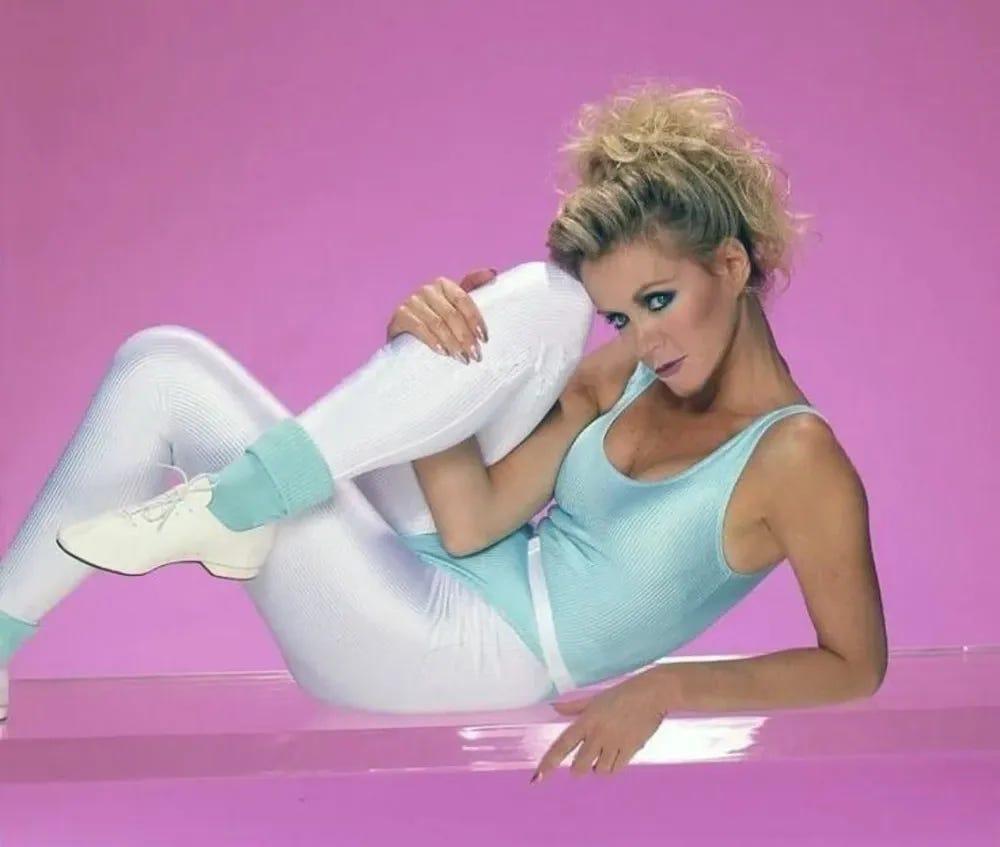
We’ve been made small for a very long time. And I’m not just talking about our bodies.
Every woman can enumerate many experiences of being asked to take up less space—on the athletic field; at home; in public; at the office; in the boardroom. We are scolded when we are too loud, too aggressive or too opinionated. We are bitchy, we are bossy, and we are overbearing. And as we tamp down our frustrations, our voices, and our impact, we’re expected to be grateful for a long, slow, multi-generational arc of progress. We’re expected to celebrate the nearly imperceptible difference between being silenced and being interrupted.
So, it’s no wonder what our eyes scan for in the mirror. When we’re calculating the numbers on the scale or the dress rack, we’re quantifying how small we can make ourselves. Not just for us. But for everyone else. The judgments we cast upon our bodies superficially express a much deeper, insidious cultural training. When we size ourselves up, we assess far more than our bodies.
We assess the space we’re allowed to consume.
I’m tired of it. The more I challenge the programmed judgment of my body, the more I crave its opposite.
I want to take up more space.
I want to be louder.
I want to be seen.
I want to be bigger.
And I am.
Ten years ago, I wasn’t able to hoist 275 pounds off the ground. I wasn’t able to consistently advocate for myself and others. I wasn’t able to voice my opinion without questioning its value.
I still struggle with which numbers to count. But every time I hoist myself over a pull-up bar or swing a kettlebell over my head, I feel something deep in my bones.
I feel myself multiplying.
YESSSSSSS -- so inspiring, both you and Sarah! Thank you for sharing, and for always encouraging me. Always a quarter mile behind, I'm always reminded by you there's so much to look forward to.