

The opener began. She strutted across the stadium stage in a skin-toned unitard, an optical illusion that made her appear totally naked—save for long, dark, trailing hair attached to her nipples and her crotch. As she shouted her lyrics into a crowd of 18,000 people, she aggressively grabbed and jiggled her belly while toned, androgynous dancers gyrated in patent leather harnesses beside her. Behind them, a giant blow-up uterus graced the stage as the music pounded, “Fuck the pain away.”
This is Peaches. She’s 59.
The opener gave way to the headliner. A techno pop star slinked across the stage, clad in a series of slick short shorts and silky bustiers. Her sweet, ecstatic voice filled the arena as the music pounded. She writhed. She twirled. She shined. Literal glitter rained down upon her wet body as she belted out the last lines of Dancing On My Own.
This is Robyn. She’s 47.
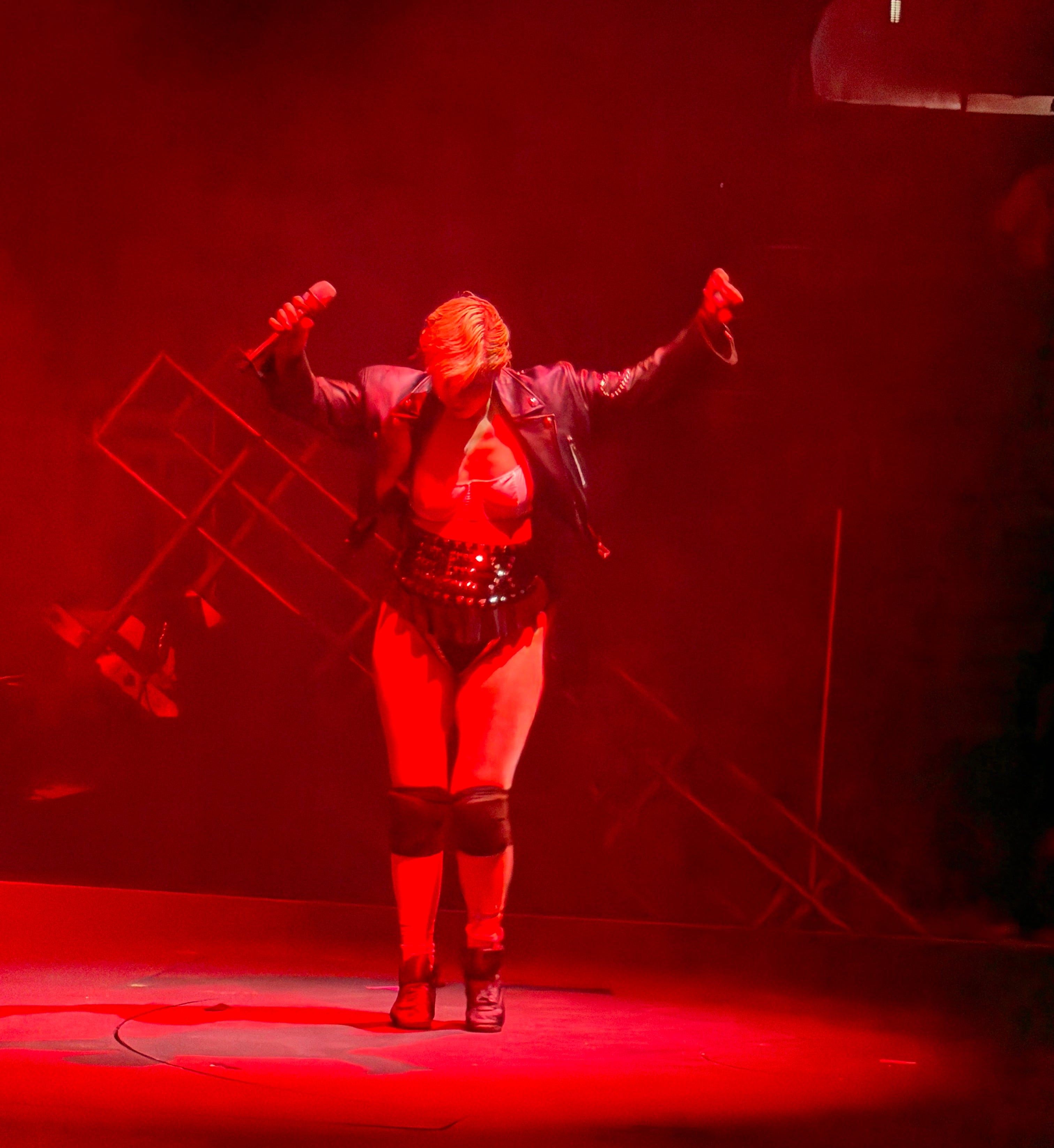
When I was younger, I considered it uncool when people opted to see their “glory days” musicians in concert. Why wouldn’t they want to see something fresh and new?
But that night in Chicago, watching the grotesque and the sensual unfurl, I was smiling ear-to-ear and singing along with every word.
This past week, I saw another one of my “glory days” artists. Situated in a plush living room on stage, a 55-year-old Erykah Badu dialed up The Alchemist on a rotary phone. Sitting on the couch, shrouded in vegan fur and a billowing jumpsuit, she sang into the phone as he laced the beat on the other side of the room. She stood still. Her voice and her music were the movement.
On the post-industrial stage, Peaches offered no apologies or explanations. In glittering arena lights, Robyn took a detour from the bass-pumping dance music to stand beside a piano and reflect on her reputation for sad club bangers. In the next breath, she unabashedly transformed the sweetest, bubble gum pop song of her early career into a mournful, moody ballad. Surrounded by seven DJs, Badu took a brief walk down memory lane, calling out to the crowd, “Where my 70s babies at? My 80s babies? My 90s babies? My 2000s babies?” She graced us with a late 90s hit, reminding the audience that she’s been making music for more than three decades. Then she deliberately thanked us for showing up for her new music, remarking on the bravery it takes to continue creating. Across the sets and stages of Chicago and Denver, no woman handled her past or her present in the same way.
Each of these women has been an inspiration for me at various points in my life. In my teens, I listened to Badu while immersing myself in beat poetry and jazz. I may hold the title for the only 16-year-old to purchase the full CD set of the Ken Burns jazz documentary. I named my cat Miles Dewey Davis IV (turns out she was female, but the name stuck regardless). In my 20s, Peaches accompanied my edgy New Yorker phase. Clad in leather and lightning bolt earrings, I prowled the streets and rooftops of Williamsburg until the sun rose. From my 20s to today, my eyes have filled more salty and sweet tears than I can count as I’ve blasted and belted Robyn from my car, my living room, my shower, my gym, and everywhere in between.
My younger self would’ve argued that seeing all these artists is nostalgia bordering on cringe.
Sometimes, watching an icon perform is an exercise in crushing disappointment. They show up late. They plod through the hits. They end the show early. And who could blame them? In one of the most anticipated and deflating concerts of my life, I watched Lauryn Hill slog through Doo Wop (That Thing) and could only imagine how much it must’ve felt like Groundhog Day.
But age doesn’t equate to repetition or irrelevance. Great artists (and great humans) evolve. Peaches into a performer celebrating “the benefits of aging disgracefully.” Robyn from a pop icon who rejected sex symbol status to a middle-aged, single mom who recently said, “the purpose of my life is to stay horny.” Erykah Badu, a mother of three and a doula, who told us she’s spent eight months of each year on tour, and in the next breath pondered what aspects of her art and self are worth preserving and protecting in a broken world.
As a woman in my 40s, I receive regular messages from the world around me, politely asking me to step backwards into the shadows. And if we’re talking about what’s truly cringe—well, that’s it. There is nothing more played out and trite than the old trope of women aging out of the spotlight or becoming less provocative, less sensual, or less relevant with each passing year.
Celebrating, supporting, and standing with female artists as they mature and evolve reinforces for me the nearly endless paths available to each of us. Whether you’re 59, 55, 47, or some other number, none of us need to blatantly accept the lie that our force dwindles with each passing year. And none of us need to explain ourselves. My icons have just as much right to their place on stage as I do my voice and presence.
But that right is easier to claim when you lean forwards, not backwards. When you continue to create and speak up. When you choose to shout and scream in grotesque hair extensions, to croon and strut in heels and glitter, or to freestyle in your jumpsuit while coiled around the cord of a rotary phone.
These aren’t walks down memory lane. They are a deliberate march forward.