

The Closing Circle
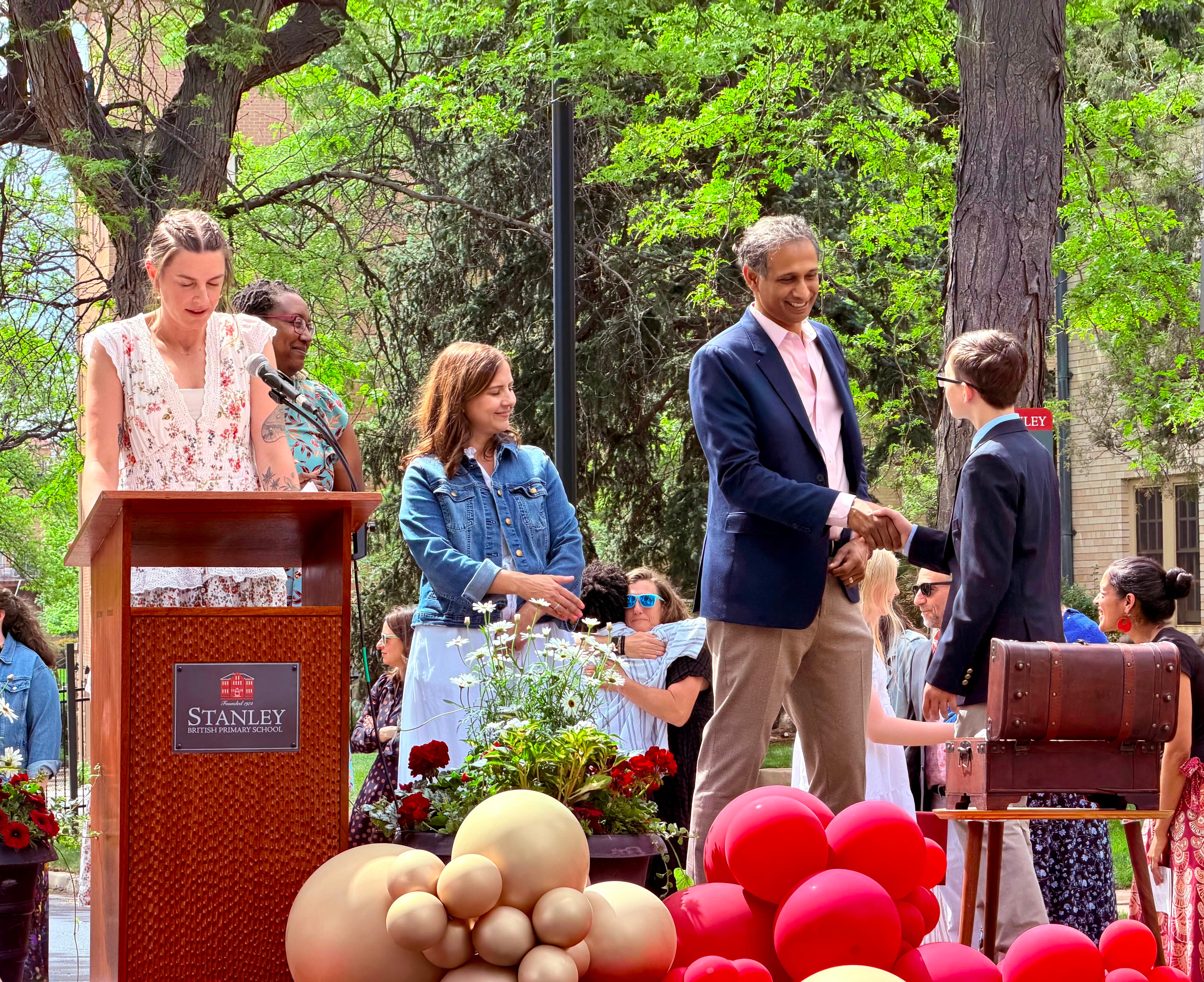
My son graduated from middle school this week. His school hosted a series of celebrations and closures to mark this rite of passage. In a Closing Circle, classmates gathered in their homeroom groups—a collection of students spanning three grades, all who shared the same advisors throughout middle school. One by one, each eighth grader sat in the center of a circle comprised of their peers. The students surrounding the eighth grader each shared their favorite memories and takeaways about the person in the middle.
Then came the graduation speeches. The night before graduation, in a room of 150 people, each advisor stood on stage with their advisee, delivering a speech tailored to that specific child—who they are and what makes them extraordinary. Each student stood beside their advisor, quietly receiving all of it: the praise, the kindness, and the attention of a full gymnasium.
On graduation day, each eighth grader delivered a speech of their own to the entire commencement audience. As they exited the stage with their diplomas, each child walked through one last closing circle, comprised of every faculty member. Each teacher shook their hand, looking them in the eye with pure joy, and ushering them forward.
I cried. Multiple times. So did Leo.
Driving home from the graduation festivities, Leo and I reflected on how moving it was. He said he found himself crying during the advisor speeches, but not in the moments he expected.
“I wasn’t crying for any specific person,” he said. “Even the kids that I’m not friends with, or that I didn’t really hang out with… we are all going through the same thing, at the same time, together. I think we all know that. We’re all going through something big. And it feels like we’re there for each other, no matter what.”
Like every eighth grader, Leo is excited and scared about high school, all at once. Like every eighth grader, he sees one chapter ending and another beginning. Like every eighth grader, he’s holding memories of what went well, what didn’t, and who he’s become as a result. As the graduation speeches unfolded, each story was unique, but each contained a similar arc—of individuals growing into themselves through the power of experience, perseverance, and self-acceptance.
On stage in front of his community, or in the quiet moments in the car with his mom, Leo—like his fellow eighth graders—was choosing to stay open despite his fears. He was remaining attuned to a bigger truth: that his experience, while uniquely his own, is cut from the same cloth as his peers.
The Wind on the Mountain
Last year, I went on a 10-day silent meditation retreat. The retreat had extensive guidelines to shape the experience. No talking. No cell phones. No reading. No music. No eye contact. No passed notes. Just me and 100 silent retreatants living in monastic quarters, following a consistent daily regimen: rising at dawn to the meditation bell’s gong; seated meditation; moving meditation; silent meals; sleep. The container was set. Teachers provided daily spoken guidance. Each day, we sat in a large circle, receiving their instruction in silence.
From the outside looking in, it sounds pretty damn weird.
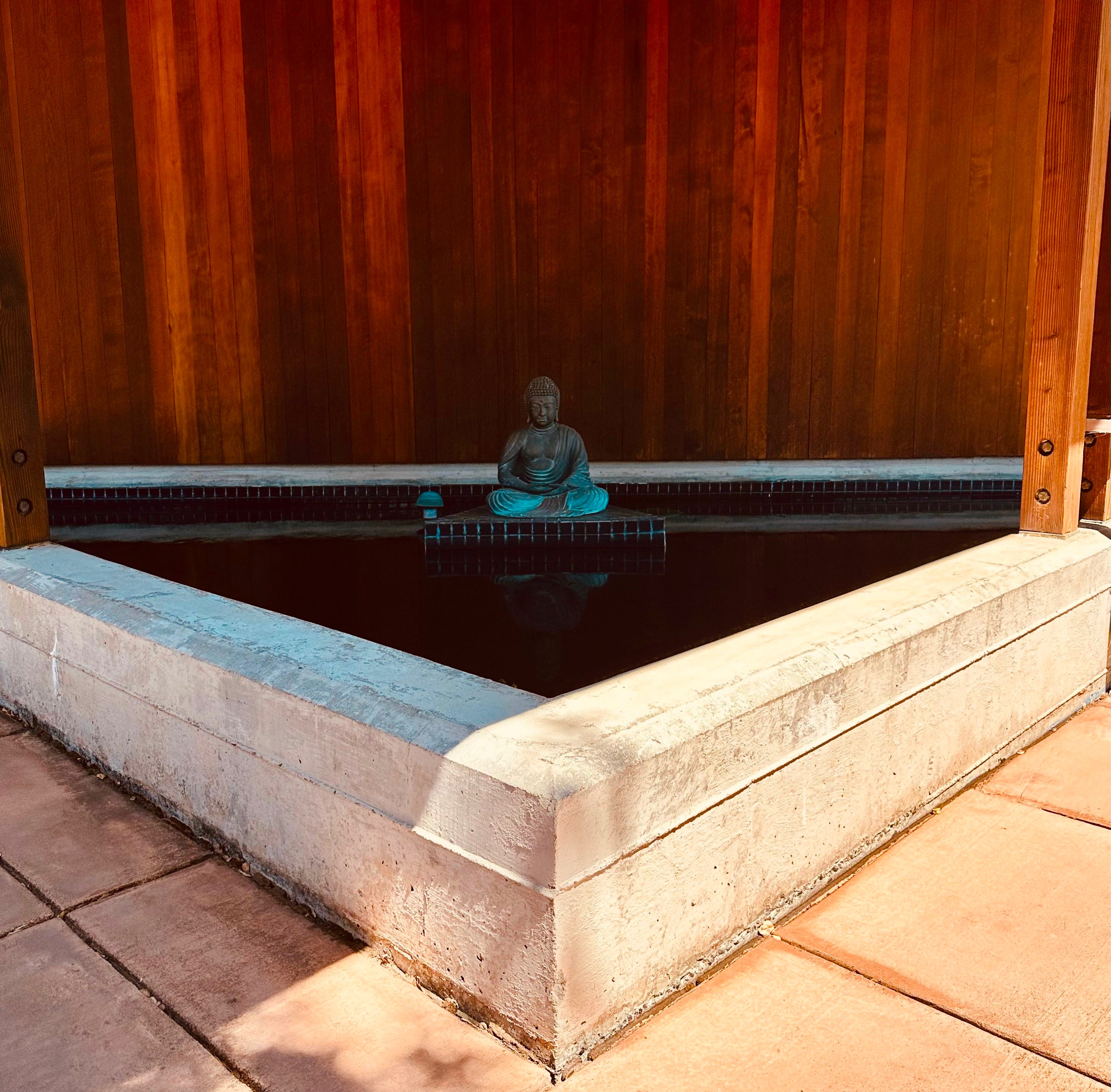
But, something magical happens in a setting like this. When you are no longer concerned about being “liked,” you slowly set down the performance of your personality. Over the course of days, you unwind the need to be regarded. The energy you typically hurl outwards—projecting who you are and why people should care—that energy recalibrates. You become a vessel. An open container to receive.
Towards the end of the retreat, I hiked into the hills behind the meditation center. The smell of wild sage permeated the air. The crunch of dirt beneath my shoes pattered softly in my ear, keeping rhythm with my strides. I reached an overlook where I could see far outwards, towards a foggy California ocean bay many miles away. As I stood on the lookout, the wind blew softly. In that moment, I felt the wind blowing through me. I felt myself as the wind. As the dirt. As the sage. As the bay. As one small, inextricably interconnected microcosm in the macrocosm of the universe. Tears rolled down my face as I stood, palms open, arms outstretched, feeling.
Constricted Apertures
In my daily life, the vista and the horizon are harder to see. At work, my colleagues and I engage in back-to-back meetings, hosted in the high definition 2D frame of a Teams screen. Thousands of us sit, in our individual office chairs at our individual laptops, typing away to respond to emails and pings, to author perspectives, to build and implement new solutions for data, technology, and AI. Full-fledged adults, broadcasting to the world who we are, what our expertise provides, and how we deliver impact.
In this setting, the aperture tightens. We project labels: our expertise; our years of experience; our accolades; our ambitions. Usually, these broadcasts are recorded in the language of “me”, not we. Each person pushes to be heard. Interrupts to get a word in. Steers toward their own needs rather than the whole.
It’s exhausting.
We are operating from a place of high demand, high expectation, and—let’s be honest —fear and scarcity. Fear that there isn’t enough for all of us. Fear that we can’t achieve the objectives unless we focus on our own goals. Fear that the standards are impossible to achieve.
It’s no wonder that we contract. Our vision narrows to a pinpoint: ourselves. I see it happen daily in my colleagues, and I see it happen in me. I know I’m seeing through a narrow lens when my patience runs thin and my tone gets sharp. When I find myself clamoring to interject in a meeting of vocal leaders, each expounding the importance of their individual objectives. When I end the day depleted, feeling like some kind of lone wolf despite being surrounded by countless smart, capable, kind people.
Creating the Container
Graduating eighth graders feel their fear in their bones. But, they also admit they’re in an active mode of self-discovery. They are just beginning to form who they are, working it out in real-time, before our eyes. That freshness, mixed with the simultaneous acknowledgement of their wisdom and all they’ve yet to learn—that keeps them open.
As adults, we’re encouraged to project something different, more self-possessed, more self-confident. We’re encouraged to appear as if we know ourselves fully; as if we’ve crystallized an elegant personal value proposition. We pose before a zoomed in lens, ready to take the world by storm and to show everyone what we’re all about.
But let’s be real: we don’t have it figured out.
Eighth graders are early in the journey of self-discovery, but adults are also perpetually in self-discovery, whether we acknowledge it or not. Acknowledgement hinges on humility and vulnerability, on dropping the facade of having it all figured out. The meditation retreat crafted a container where every adult acknowledged this implicitly, simply by showing up. The eighth grader circle, the meditation circle—these places invite, encourage, and celebrate us living inside the messy state of becoming instead of the tidy state of knowing.
When the fabric of modern life is geared towards individualized optimization, striving, and outcomes, how do you create the container for openness? How do you create the space for discovery?
It’s hard. I don’t have all the answers.
But I know it’s a space I long for—for myself and others. I want to create the conditions that break the pinpoint focus of striving and self-promotion, and widen the aperture towards the bigger picture, the interconnected vista. I want to cultivate spaces that honor the individual, the child, the wild sagebrush, just as much as the collective, the circle, the distant bay.
For me, it means listening more than I speak. Staying curious about who people are still becoming. Attuning to what’s happening for all of us, not just what’s happening for me. And catching myself when I bristle—asking what fear lies beneath, within me as much as within others.
Even when this is my deepest intention, I still stumble. The wind on the mountaintop isn’t blowing through me in a Tuesday afternoon leadership meeting.
But I can leave the window open to feel the breeze.