

Dear Diary, I’m sorry I haven’t written for a while…
As a girl, I frequently began my journal entries in this way. Over the years, volumes of notebooks accumulated, some filled to the last page, others discarded as life’s chapters unfolded and my aesthetic tastes evolved. A pink patent leather diary with a miniature key. A recycled paper spiral notebook. A leather-bound volume. I apologized for my negligence to many of these inanimate objects.
During my first marriage, I abandoned my journaling practice. My first husband was (and still is) a gifted writer. He once wrote a travel diary about our beleaguered, month-long trip through India that my parents still reference as one of the funniest things they’ve ever read.
With his gifts came firmly held requirements for set and setting. In order to write, he insisted, he needed hardwood floors and a window to gaze out from. I hadn’t found either of these things personally necessary, but what did I know.
My own writing paled in comparison to his. So, what was the point? Not to mention, I had more important things to worry about than writing The Next Great American Novel. Between work, motherhood, the dishes, and everything in between, I didn’t have the energy for creative pursuits. And, if I’m being honest, I resented his.
What little writing I did was focused on making money—prolifically producing SEO-driven articles for DMV.com, a content farm that churned out copy to drive traffic and third-party information sales, under the guise of “a non-government site” that “assists drivers” in navigating the complexities of their state’s DMV. Thirsty for a page-turner on how to register a motorcycle in Ohio? I got you.
As my career evolved, so did my professional writing and content strategy expertise. At a financial services company, I led the content strategy and content creation for our consumer marketing presence. I authored countless articles on financial literacy and retirement. At one point, my authorship volume triggered a revolt from my design counterparts, who cried uncle over the edge of their cubicles. They couldn’t bear to make another infographic for my latest perspective on financial freedom for life.
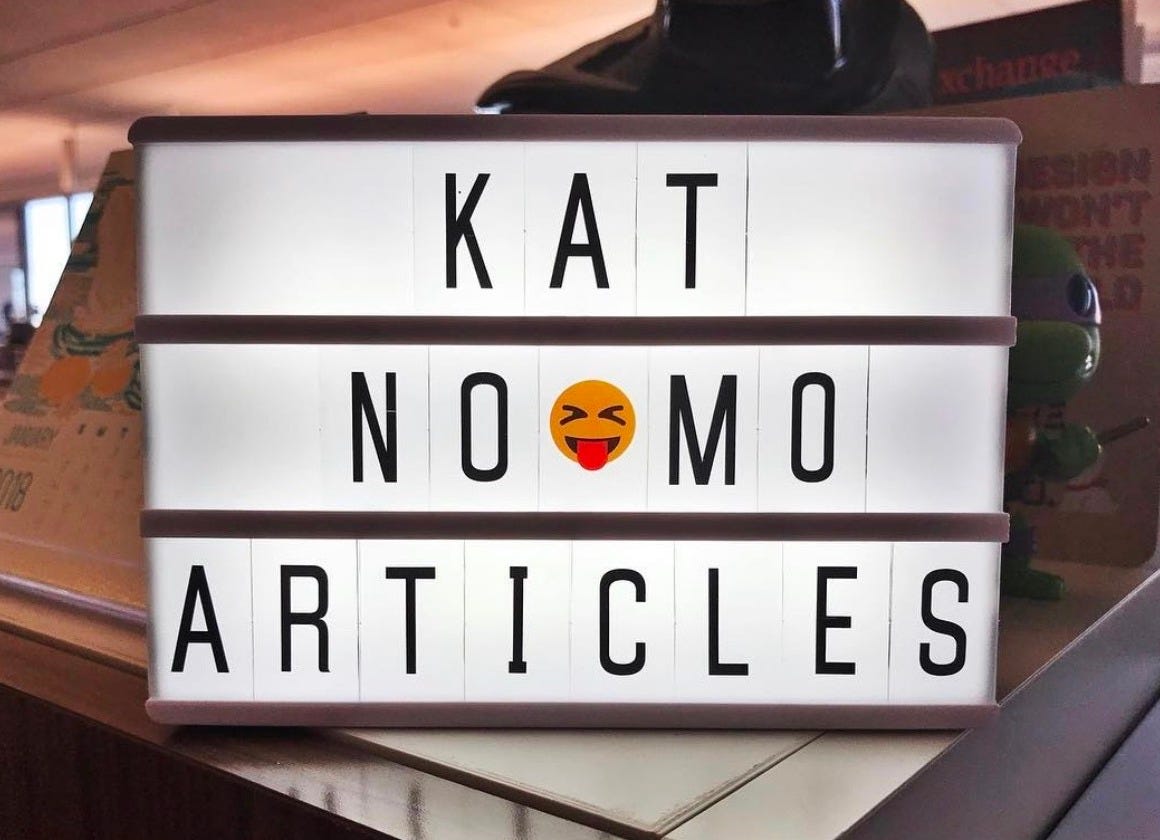
Outside of work, writing was elusive. Journals were purchased. An entry was made. A few more lines, months later. Eventually, another dust-covered volume wound its way into a trash bin.
When I started this Substack, in the back of my mind, I thought it would help me broadcast Authority—as a wine geek and “thought leader” in marketing, technology, and AI. Though I didn’t have an expressed goal in mind, I harbored an idea that writing would open up new pathways for me.
From the outside looking in, it hasn’t. The TED talk invite, the Forbes and Wine Spectator features, the book deal, and the 983,093 follower count haven’t magically materialized.
But they couldn’t.
A few weeks ago, a coworker and I reminisced about the glory days of blogging, mySpace, and Tumblr. I mentioned my Substack. “Ooooh!” she asked, “What’s your blog about?”
“Whatever I feel like talking about,” was my reply.
I recently learned that, when we attach external outcomes to creative endeavors, creativity declines. The age-old corporate incentives of bonuses and promotions stifle, rather than stoke, creativity.
Somewhere along the way, I stopped writing what I thought I should write in favor of what I wanted to write. I abandoned decades of professional knowledge on content strategy best practices. I discarded a focus on a target audience. I stopped optimizing my H1s, H2s, and metadata for SEO and LLMs. I stopped optimizing for engagement. I stopped trying to be seen.
I kept only one best practice: consistency, a commitment to write every week.
In the beginning, it was easy. I had a lot to say. Years of ideas bubbled onto the page. Personal narratives were spun. But now, many months later, I don’t always have some grand source of inspiration. Often, in the 48 hours leading up to publishing something, I haven’t even gotten started. But I write anyway.
And in doing so, a new door has opened. It’s not the heavy door of Authority unlocking as I fire up an article in my robe and my slippers. It’s something else.
At points throughout this year, as I’ve unwound my focus on goals, I’ve felt lost, listless, and lazy. I’ve still accomplished things I’m proud of—launching a wine brand, sending my son to high school, purchasing a new home. But without the goals, I’ve felt unmoored.
The more I examine my goals, the more I see how extrinsically motivated they’ve been. My goals were measurable, linear, and highly broadcasted. In the many years that I set, tracked, and achieved those goals, I said no to anything that didn’t serve my objectives. Wandering curiosities and random side quests? No. I suffocated creative urges in favor of quantifiable results.
Writing is the opposite of all that. It seems like a small act. It’s just a post, about nothing, about everything, sent into the void for nobody or anybody to read. But in the context of my personal journey, it’s a much bigger gesture.
It is a rewiring.
It’s being brave enough to create without reward, without organic search rankings, and without hardwood floors.
When I step along this path each week, I’m not marching toward some extrinsic outcome. I am stepping back into myself. I wind past the bend of corporate content strategy, through the bramble of DMV.com articles, rest beside the apologetic girl with her diary, and continue walking deeper. There is no destination. It’s just walking.
In a recent NPR interview accompanying his book release, Rick Rubin talked about the value of creating for creativity’s sake. When we create with our hearts and souls, and share it regardless of its reception, we’re doing something true.
“Having the goal—that’s not going to help you get there. It’s more like, start finger painting and see what happens.”
I’m remembering how to finger paint. It doesn’t matter what it looks like. It just feels good beneath my fingertips.